Welcome to Reconstruction
A MOVEMENT CREATING A VIBRANT AND JUST SOCIETY
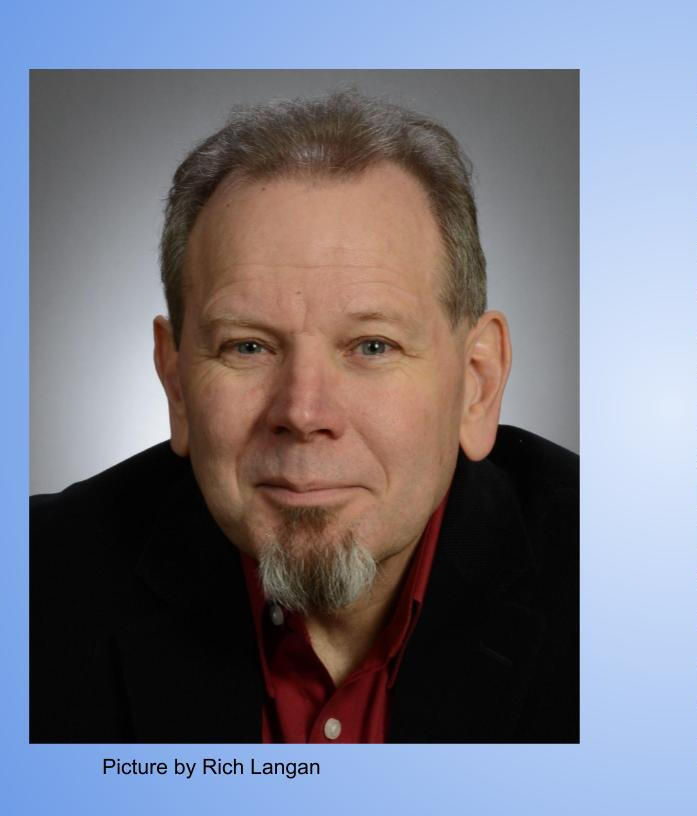
Randy earned a BA in History with a minor in Humanistic Studies from the University of Wisconsin-Green Bay. Born and brought up Roman Catholic, middle class, and in the Midwest, Randy raised a blended family and worked as a paperboy, store clerk, and educator. His experiences as a teacher include working in 2001 in Lahore, Pakistan — 9/11 was the first full day of school — and the following school year in Monterrey, Mexico. For most of his career he taught in special education. His last teaching assignment was at Menominee Indian High School. After retiring from education, Randy served Green Bay for a decade as a city alder.As a budding, though remarkably late blooming author, Randy took creative writing classes at UWGB with Peter Cooley and Peter Stambler, and has been involved with several writing workshops and groups. His published work can be found in fsm. and The Voyageur.
a tad lopsided
on a potter's wheel
i compose my world with wet
clay of headstrong words
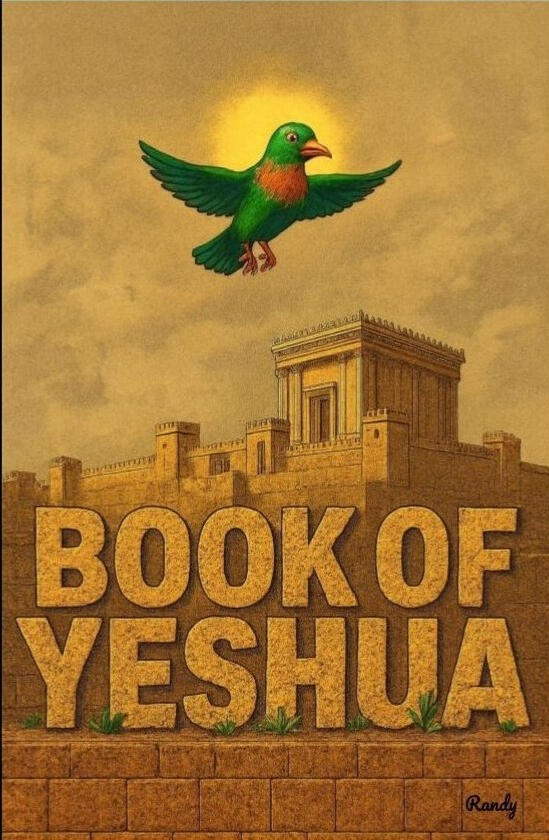
The Book of Yeshua: Chronicle of Our Spirit. vol iii is a speculative history reconstructing the world of Yeshua and his relationship with Our Spirit. Known by many names throughout the ages, Our Spirit was first called Spente Mainyu in Zoroastrianism, and later as the Holy Spirit or Holy Ghost in Christianity and Islam. To be more inclusive, the book refers to the creative spirit of compassion as Our Spirit, a force that not only changed religion, but influenced Humanism and Socialism.What do we know about Yeshua? The biography historians reconstruct is pure conjecture. Not a shred of evidence or documentation, during his lifetime, exists to shed a light on his life. The earliest Gospel was written thirty years after his crucifixion, relied on memories, and composed in Greek for a Roman audience. The Gospels hide as much as they reveal the historical Yeshua.Nor has the story of Our Spirit been told. At its core, this narrative is a spiritual biography; one that reveals a revolutionary spirit moving us from an ancient to a modern world. The movement then, as now, is over our social soul. Though under attack today by white Christian nationalists, through the lives of Yeshua and his followers, Our Spirit developed as a cultural and political power with a will to be reckoned with.As an annotated narrative of social justice and spirituality, the inspiration for the Book of Yeshua began with studying Judaism, Christianity, and Islam in college, and flourished after reading Reza Aslan’s Zealot: The Life and Times of Jesus of Nazareth. Materials employed in the writing of this book include: The Bible, Gnostic Gospels, Dead Sea Scrolls, several biographies and histories–many authored by Michael Grant, and online resources.
Lion's Mouth BookTalk excerpts
Lion's Mouth BookTalk Transcript
(edited for clarity)
Up And Coming
IN THE WORKS:2026 Fall - RedBook of Poetry2027 Spring - GrayBook of Poetry2027 Fall - BlueBook of Poetry2028 Spring - YellowBook of Poetry2028 Fall - Book of Zarathustra: Chronicle of Our Spirit Vol. i
Red gets in your face with viscera from angry stars burning with screams from unheeded needs & scarred dreams; its flag pole, like a middle finger against a dividing horizon, lifts red as the revolutionary stripe on the flag of the United States of America, red snaps in rough winds for maimed lives mounting slippery steps, those dumped—leftovers from ravaged flesh—savaged neurons with chanting pheromones sailing in rebellious fetters of air—nesting in beaten dull or trembling senses, low moans from suburban lawns, a brazen cry at high noon, rush of raised fists and many marching feet down city streets of change—their hands carrying signs, their voices singing out to distant stars and back in your face: Justice—love of Justice—Justice flying high with Love!
loss and grieving
Blue burn—fire’s essence of primordial need wrapped in cool & cold & warmth within elemental belly of bonding—bodies twisting or torn apart or as sticks nuzzling and rubbing together to burn blue
Join us for an illuminating conversation with author Randy Scannell, sharing The Book of Yeshua: Chronicle of Our Spirit. vol iii. This speculative history reconstructs the world of Yeshua and his relationship with the Breath of God.
Lion's Mouth @ 211 N. Washington St, Green Bay
Musings of a monophysite drifting while sipping a blue cosmo swirling in a tall thin stemmed yellow tinted glass with fiery red rim salted gray.
Beginning with a big bang, Book of Zarathustra follows the development of Our Spirit to the founding of Zoroastrianism and that religion’s influence on Judaism and, especially, Christianity. The life of Zarathustra and his adherents tell a bloody and courageous story: rejection and murder, hope and resilience.
I want to start out thanking Amy and Noah and the rest of the staff, for hosting this event. Thank you very much. Let's hear it for the lion's mouth.I'd also like to thank my wife Rose whose support and input on this book really got me across the finish line. When I was a city alder and did interviews. At the end of every interview they'd ask, “Do you have anything else to add?” And I'd say, “Yeah. Hi, Ma.” And they'd say that's going in. They never put it in—not once. But my mom's here, so, “Hi mom.”So, and for everyone else, I want to thank you for being here. I appreciate it. And I want to welcome everybody to reconstruction a movement creating a vibrant and just society.As a reconstructionist, I believe in significant, peaceful, systemic change. And that's with all our social systems; that's with education, our justice system, our economic system, political system—they all need significant change. Now, you might ask. What changes, specifically am I talking about? I don't know. I mean, I've got a few ideas, but these changes have to come about through discussion and consensus. But I do believe passionately that they have to be founded on compassion. That our systems represent our values and that our systems should be founded on compassion.That brings me to now, finally, the book: A historical narrative of compassion as a spirit and that spirit's relationship with historical figures who made compassion more than just a personal act, but a way of thinking and behaving and being compassionate.Let's start with the name Yeshua. In case you're not aware of it, that is the name for Jesus—more commonly, we call him Jesus. We come to Jesus through, he spoke Aramaic, but everything written about him was in Greek and in Latin, and then translated to English. Through that convoluted system is where we end up translating his name as Jesus. If you went directly from Aramaic to English, a truer rendering of his name would be Yeshua.And that's what I do throughout the book. I change everybody's name back into their more Aramaic or Hebrew name. So John the Baptist is now Yohanan The Baptist. Judas is Judah. Mary is Miriam. Some names like James didn't even exist at that time. It was Jacob. It's a long convoluted story about how we ended up getting James out of that.Then not only with people's names, but with also some of the city names. This was a time when the Greeks had conquered this territory and then the Romans. And so if you look at maps which there were no maps at that time, but when maps started being made, they named the towns with the Greek and Roman names. The people living at that time in those towns would not have called Cappadocia, Cappadocia. They will call it Kefar Nahum. That's what I call it.And certain words like apostles, that's a Latin word. It means emissary. I don't use the word apostle. I use the word emissary. Synagogue: that's a Greek word. They called these places qehalas. So that's the word I use, qehala.With someone like Cephus, his birth name was Simon. In the book he is a follower of Yohanan’s. As he's following Yohanan, I use Simon. Then he becomes a follower of Yeshua, who later on at Mount Tabor gives him a new name. You are my rock, Cephas. So the time between Yohanan and on Tabor, I call him Simon-Cephus. After Mount Tabor, he's just Cephas. The reason we call him Peter is, of course, the Latin word for rock is petros. That's how we got Peter.I strip away all that to try and get back to the original people, the original places to give you a feel of what it was like to live in that time.In Jesus' lifetime there was no documentation of his life. None. In his circle it was quite common to change names. In the Bible there's several people. I mean, you have Simon changed his name. Levi changes his name to the Emissary Matthew. And so I have speculated that Yeshua's birth name, and I just picked the name Yitzhak, that that was his birth name and that he changed his name to Yeshua. But to know why and how he did that, it’s in the book.The long title of the book, the short title is Book of Yeshua. The long title is Chronicle of our Spirit, Vol. iii. Let me explain volume 3. When I first thought of this, I thought of this as one big book. Then as I was getting into it, it was getting bigger and bigger and I said this is going to just be too big a book. I’m going to need to break it down by historical figure. I looked at what I had and what I had the most written about was Yeshua. I said, OK, I'm going to go with that one first. Chronologically it's the third volume. Honest to God, I wasn't imitating Star Wars. I had a lot on that subject, so that's what I went with.Our Spirit is the name I give the spirit of compassion. I chose that name because historically this movement of compassion was very much a religious movement to begin with. And they believe in demons and in angels. This all really begins with Zoroastrianism, a Persian religion founded by Zarathustra, or if you follow the Greek rendering, Zoroaster. The creed for Zoroastrianism is very simple. It all comes down to three sentences. Think good thoughts. Speak good words. Do good deeds. They believed in angels. They believed in one God, Ahura Mazda—which means Wise Lord. They believe in angels and the premier angel is called Spenta Mainyu—which is a creative, powerful force of compassion. So that's where it all starts. That’s in Volume one. I'm working on that.So how does that then connect to all these other characters? Well, the way it connects to Yeshua is we have to go back to when the Babylonians conquered the last state of Israel and destroyed their temple, the Temple of Solomon, and took a whole bunch of Jews back to Babylon. Well, after time there rises out of Persia a great conqueror, Cyrus the Great who was a very unique conqueror for his day. He was a compassionate conqueror. He conquered Babylon.(The way he was a compassionate conqueror is that—I mean, he could be bloody violent, but if you saw him coming to your town and you said, well, we're not going to fight. You go up to him and say, “OK, you win. Excuse me, I will go kill myself.” Because that was the standard practice, that people who were conquered, they killed themselves before their conqueror had a chance to do it because God knows what they would do to them. Better to kill yourself and their family. And Cyrus the Great said, “No, no, no, no, no, we're good. You don't have to do that. And I'm not going to pillage your towns and burn to them to the ground and rape your women.” Which was standard practice no matter what if you were conquered. He said, “As long as you can maintain order, because I don't want to have to come back here, recognize me as your overlord and pay me my tribute, you know, we're good. Which was very unique for that time. Unheard of. He was a compassionate conqueror.)So with that reputation when he conquered Babylon, some of the exiled Jews there said please can we go back home and can we rebuild our temple. He didn’t care what you worshiped or anything. He wasn't going to impose his religion on anyone. And he said, sure, go on. In fact, here's some money to help build your temple. So that's why Cyrus the Great is considered in Judaism a Messiah. Because the Messiah is a great political and religious leader. Because he let the Jews go home and helped them rebuild their temple, they consider him a Messiah.Jews came back to their homeland and not only do they bring Cyrus the Great’s money, they also bring ideas from Zoroastrianism and Spenta Mainyu. The Jews are there's different sects. You probably heard of the Sadducees, the Pharisees and the Essenes. The Essenes were a very ascetic group, a very religious group, a very devout group that isolated themselves from everybody else. They were particularly influenced by Spenta Mainyu, by power of compassion. And there are historians who think that Yeshua was an Essene. Most historians think no, but he appeared to have definitely been influenced by the Essenes.So in Judaism, they didn't call this compassionate spirit or angel Spenta Mainyu. That would have been an aberration, you know, it's a foreign name. They translated it into the Holy Breath or the Breath of God. At that time, the word spirit as we think of it didn't exist. They believed in God. There are gods all over the place. They believed in demons and angels, and they too were all over the place. There are demons and angels in rocks and trees. They can possess people. From Judaism and Yeshua, it becomes part of Christianity as the Holy Spirit. Because the word for breath in Latin is spiritus. That's how we come to get to the Holy Spirit, the Holy Ghost.There's actually a lot I want to say about the spirits and the supernatural. It's a world filled that's very supernatural. Everyone believed, even the Greeks, who with their logic and observation and science, they still believed in the gods and worshiped the gods. So it was a time that if you're not, if you don't believe in that, you think of it as very superstitious. If you do, I mean, it was a time that just abounded with that kind of thinking.In the book, I kind of try to tread a fine line to cover both bases here. So if you're religious. There's nothing…I don't…the purpose of this book isn't to debunk religion. It's not to support religion either. It's just to get things up as they were. And and if you're religious, I should hope you find nothing in it that's offensive. If you do, I'd like to know what it is.But if you're not religious. Like myself, I think of it as spirit, as a team spirit. That's a real thing. Teams get together and they create the spirit that they feel that influences them and it becomes like a symbiotic relationship in the spirit has a life of its own. And it's like our behavior when we do something. Our acts kind of ripple out from us. You could say the spirit of my behavior goes on.I do that balancing act where I go back and forth like that and try not to. With the miracles with some of them I kind of hint that maybe there's a psychological reason for this or a practical way that this is going to happen, but some of them I just leave completely open-ended. Because for me, it really doesn't matter if you believe in angels and God or you don't. I think either way, we can all rally around compassion as a force to do good in our society.